
Why is it that the people who love the Halloween season most are sometimes the ones who also end up enjoying it the least?
There's a specific kind of exhaustion that only Halloween people know.
It hits somewhere around the second week of October. The calendar is full. The group chat is moving fast. There are three events this weekend and you said yes to all of them, and somewhere between the third haunted house and the Halloween party you didn't really want to attend, you realize: you're not having fun. You're just executing a checklist.
This is Halloween burnout. It's real, it's common, and it happens almost exclusively to the people who care the most.
The people who don't particularly love Halloween don't burn out on it. They attend one pumpkin patch, watch Hocus Pocus, and call it a season. But you — the person who has been waiting since November 1st of last year, who has a watchlist and a decoration scheme and opinions about the best regional haunted attractions — you are the one who ends up exhausted by the holiday you love best.
Here's what's happening, and how to stop it.
Why It Happens to the People Who Love It Most
We talk about this SO often with guests on By Pumpkin’s Light: Halloween burnout isn't about doing too much. It's about the gap between what you imagined the season would feel like and what it actually feels like when you're rushing from event to event, phone out, trying to document everything, saying yes to things out of obligation rather than joy.
The season you love exists in a specific register: atmospheric, slow, a little sacred. The season you're actually having in peak October is often the opposite — logistically complex, socially demanding, and moving too fast to actually feel anything.
The love for the season is real. The burnout is what happens when the calendar stops serving that love and starts overriding it.
The Signs Worth Knowing
Burnout doesn't always arrive as exhaustion. Sometimes it looks like this:
Resentment of things you actually love. If you're dreading the haunted house you've looked forward to all year, that's a signal. The event didn't change. Your capacity for it did.
The feeling that the season is happening to you. Rather than with you, or because of you. You're along for the ride rather than steering it.
FOMO-driven scheduling. Saying yes to things not because you genuinely want to go, but because you're afraid of missing something. This is how you end up at four events in a weekend and present at none of them.
October 31st arriving as a relief rather than a celebration. If Halloween itself feels like the finish line rather than the point, something went wrong in the weeks before it.
What Actually Helps
Know your number — and go one under it.
Most people have a natural October pace: the number of events, outings, and commitments that feels full without tipping into overwhelming. Whatever yours is, try subtracting one. Not because you have to, but because the freed-up evening almost always becomes the best one — the spontaneous rewatch of something you love, the long walk you didn't plan, the night where you actually felt the season instead of scheduling it.
Separate the obligations from the genuine wants.
Go through your October calendar and mark everything honestly. What are you genuinely excited about? What are you attending out of habit, obligation, or group pressure? You don't have to cancel anything — but naming the difference changes how you approach each one. The obligations feel lighter when you're honest about what they are. The things you actually want feel more like treats.
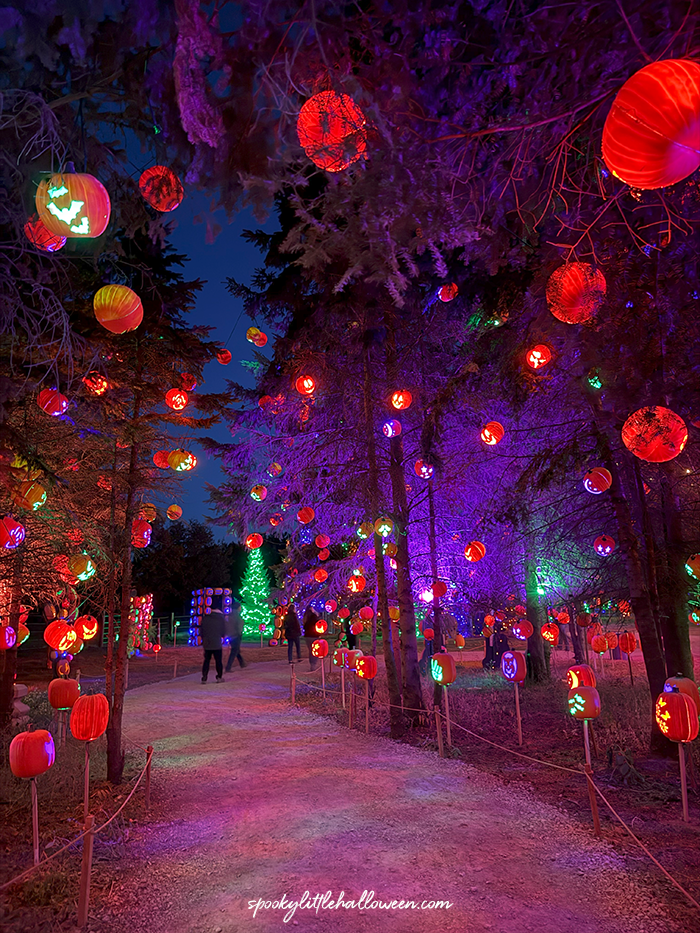
Stop documenting. Start experiencing.
This is the one people resist the most, and the one that makes the biggest difference. If you're spending more time getting the photo than being in the moment, the content machine is eating the season. Pick one event per week where the phone stays in your pocket. You'll remember it better. It will feel more like yours. The season is not a content opportunity. It's the thing itself.
Build in a slow day.
One day in October with no spooky agenda. No events, no watchlist, no optimizing. Just whatever you feel like — a walk, a book, a meal you like. The season will still be there the next day. What you're protecting is your capacity to actually feel it.
Say no to things that don't excite you.
Not every themed event deserves a yes just because it's October. If you're agreeing out of obligation rather than genuine interest, that's where the resentment starts. The season is too short to spend it at events you didn't actually want to attend. A polite no in October is an act of self-preservation.
Let other people's Octobers be different from yours.
Someone else is doing more. Someone else's decorations are better. Someone else seems to be having a more atmospheric, more maximalist, more perfectly curated Halloween season than you are. None of that is information about your season. Close the tab. Go outside. The comparison is a burnout accelerant and it has nothing to do with the thing you actually love.
Protect the day itself.
Work backward from October 31st and ask honestly: will you arrive at it with something in reserve? Halloween is not the finish line — it's the point. If you've burned through everything getting there, you'll spend the best night of the year running on empty. The whole season is supposed to be building toward something, not depleting you before it arrives.

The Real Culprit
Halloween burnout is, at its core, a love problem. It happens because you care so much about this season that you try to hold all of it at once — every event, every experience, every atmospheric moment — and end up holding none of it properly.
The fix isn't to care less. It's to be more selective in service of caring more. To choose the things that actually feed the love rather than the things that just fill the calendar. To arrive at Halloween having actually lived the season, rather than executed it.
You already know what you love about October. Trust that. Let it be enough to do fewer things better. Let the season be something you inhabit rather than something you survive.
It'll still be the best time of year. It might be the best one yet.