

Here's something the tourism industry doesn't advertise enough: the United States is absolutely riddled with haunted places, abandoned ghost towns, and genuinely unsettling roadside stops — and most of them are wide open all summer long.
While everyone else is headed to the beach, you could be standing in the middle of a 150-year-old ghost town with nothing but the wind and whatever else is left behind. You could be sleeping in the hotel that inspired The Shining. You could be walking the streets of the most haunted city in America in the golden light of a July afternoon, when the heat makes everything shimmer a little strangely and the ghost stories feel a lot closer than they should.
The paranormal doesn't take summers off. Neither should you.
This guide organizes the best haunted stops and ghost towns in the U.S. by region. Whether you're planning a dedicated dark tourism road trip or just want to add a few atmospheric detours to an existing summer route, there's something here for every part of the country.
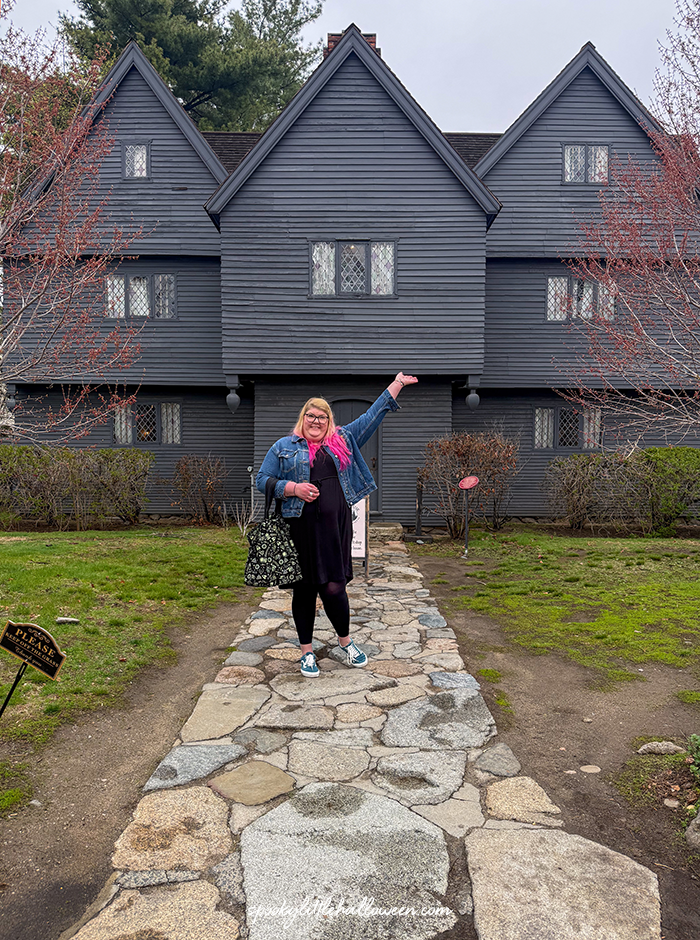
Featured: The Witch House in Salem, MA
The Northeast
The Northeast has more haunted history per square mile than almost anywhere in the country. Old money, old grudges, old wars. They all left something behind.
Salem, Massachusetts
The obvious one, and it earns that status. Home of the 1692 witch trials that sent 20 people to their deaths, Salem has turned its dark history into a year-round destination that's actually better in summer than in October, when the crowds become genuinely overwhelming.
The Peabody Essex Museum, the Salem Witch Museum, and the Charter Street Cemetery are all worth your time. The town itself is walkable and dripping with atmosphere. Book a ghost tour in advance — the good ones sell out even in the off season.
Ghost town factor: Low. Salem is very much alive, which is part of what makes it interesting.
Haunted stop factor: High. One of the most historically significant dark tourism destinations in the country.
Related content: The Best Things to do in Salem if You Love Halloween
Gettysburg, Pennsylvania
The site of the Civil War's most devastating battle — roughly 50,000 casualties in three days in July 1863 — Gettysburg is widely considered one of the most haunted places in the United States. Summer is an especially fitting time to visit given the July anniversary of the battle, when the town often hosts commemorative events.
The battlefield itself spans 6,000 acres and is open year-round. Guided ghost tours depart nightly, and the sheer scale of the history here gives even skeptics pause.
Ghost town factor: Low — Gettysburg is a functioning town.
Haunted stop factor: Very high. The battlefield alone is worth the drive.
Eastern State Penitentiary — Philadelphia, Pennsylvania
Once the most expensive prison in the world and home to inmates including Al Capone, Eastern State Penitentiary is now a 250,000-square-foot historic site open for tours. The crumbling Gothic architecture and documented history of extreme solitary confinement practices have made it a magnet for paranormal investigators.
Self-guided daytime tours run year-round; evening ghost tours are available seasonally. One of the most accessible and genuinely eerie stops on the East Coast.
Ghost town factor: Medium — it's a preserved ruin rather than an abandoned town.
Haunted stop factor: High, with strong historical credentials to back it up.
Centralia, Pennsylvania
This is the one that will stay with you. In 1962, an underground coal mine fire was accidentally ignited beneath the borough of Centralia — and it's still burning today, more than sixty years later. The town was gradually abandoned as the ground cracked and smoke began rising through the pavement. Today, fewer than 10 people remain.
Most of the streets are gone, reclaimed by weeds and crumbling asphalt, with wisps of smoke still rising in places. It's eerie in a way that has nothing to do with ghosts and everything to do with what humans leave behind. The abandoned section of Route 61 — buckled and cracked by the underground heat — is one of the most unsettling roads in America.
Ghost town factor: Very high. This is the real thing.
Haunted stop factor: Medium. The haunting here is industrial, not paranormal — but it's unforgettable.
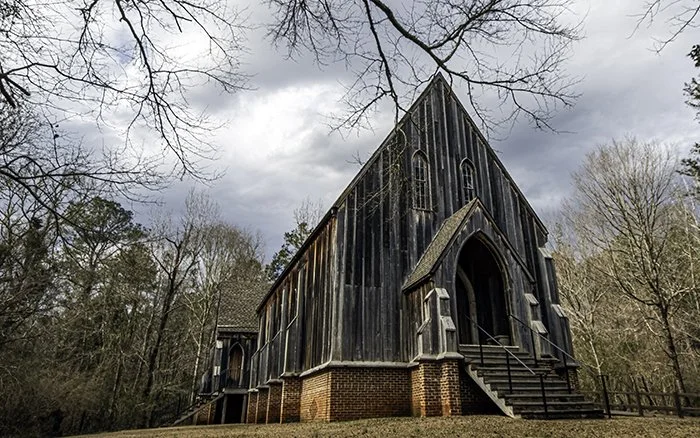
Featured: St. Luke’s Church in Cahaba, AL
The Southeast
The South has a deep, complicated, and genuinely haunted history. These stops reflect some of the best dark tourism the region has to offer.
Savannah, Georgia
Savannah is widely considered one of the most haunted cities in America, and it earns that title honestly. Built on multiple burial grounds, including those of yellow fever victims and enslaved people, the city has a heaviness that its beautiful squares and moss-draped oaks can't entirely mask.
Colonial Park Cemetery — where grave markers were moved but bodies were not — is a particular focal point for reported activity. Ghost tours run nightly year-round, and the city's walkable historic district makes for an atmospheric summer evening even if you never book a tour.
Ghost town factor: Low.
Haunted stop factor: Extremely high. One of the top dark tourism destinations in the country.
New Orleans, Louisiana
If Savannah is one of the most haunted cities in America, New Orleans is arguably the most haunted. Centuries of tragedy — plague, slavery, war, flood — are layered into the French Quarter's streets like sediment. The LaLaurie Mansion, the St. Louis Cemetery No. 1, the Myrtles Plantation an hour outside the city — the region's dark history is genuinely staggering.
Summer in New Orleans is brutally hot and humid, which somehow makes it more atmospheric rather than less. Arrive after dark and the Quarter feels like it belongs to another century.
Ghost town factor: Low.
Haunted stop factor: As high as it gets anywhere in the US.
Waverly Hills Sanatorium — Louisville, Kentucky
Built in 1910 as a tuberculosis hospital during a particularly devastating outbreak, Waverly Hills Sanatorium is considered one of the most paranormally active sites in the country. Thousands of patients died here, and the infamous "body chute" — a tunnel used to remove the dead discreetly so as not to demoralize the living — has become one of the most documented sites in American paranormal investigation.
Daytime historical tours and overnight ghost hunts are available, with bookings filling up quickly in summer. Not for the faint of heart, but absolutely unforgettable.
Ghost town factor: Medium — it's a preserved building, not a town.
Haunted stop factor: Very high. One of the most famous paranormal investigation sites in the US.
Cahaba, Alabama
Cahaba was Alabama's first state capital, a thriving antebellum city that was eventually abandoned after repeated flooding made it uninhabitable. Today it's a ghost town managed by the Alabama Historical Commission — a strange, quiet place where the old streets are still visible and the ruins of once-grand buildings stand among the trees.
It's accessible by road and genuinely undervisited, which makes it feel like a discovery rather than a tourist attraction.
Ghost town factor: High. One of the most historically significant ghost towns in the South.
Haunted stop factor: Medium. Less paranormal activity documented than historical atmosphere.
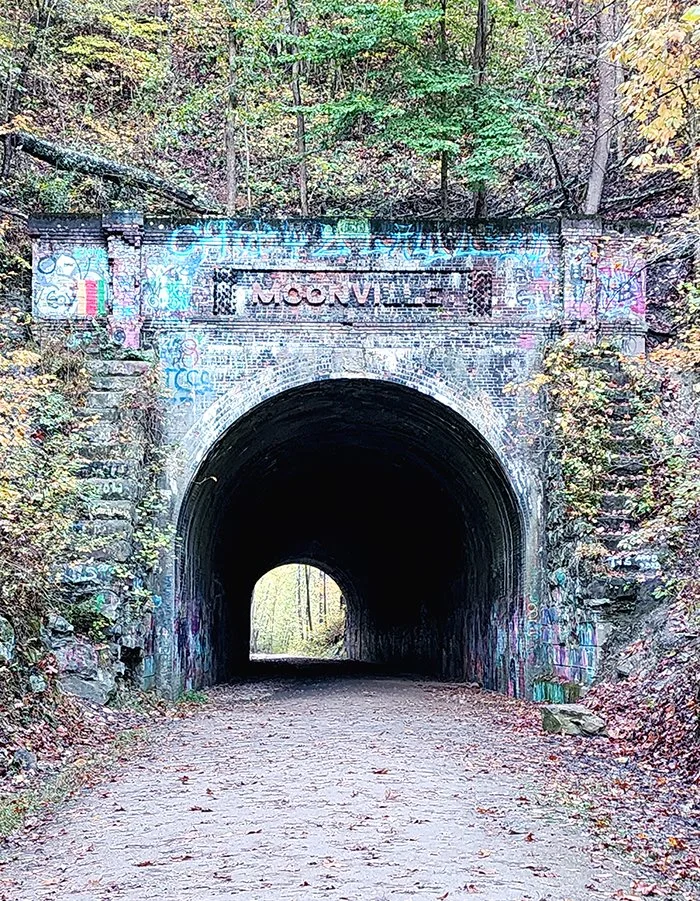
Featured: Moonville Tunnel in McArthur, OH
The Midwest
The Midwest gets underestimated as a dark tourism destination. It shouldn't.
Alton, Illinois
Sitting at the confluence of the Mississippi, Missouri, and Illinois Rivers, Alton is considered one of the most haunted small towns in America. Theories about why places near flowing water tend to generate more paranormal activity abound, and Alton has collected centuries of dark history — Civil War connections, murder, disease.
The McPike Mansion and the 1857 Mineral Springs Hotel are among the most documented haunted buildings in the region. Ghost tours run year-round and the town is compact and walkable.
Ghost town factor: Low.
Haunted stop factor: High, with a strong local ghost tour infrastructure.
Cairo, Illinois
At the southern tip of Illinois, where the Ohio meets the Mississippi, Cairo was once a prosperous river town that has since been largely abandoned. Buildings that date to the Civil War stand empty along streets that feel genuinely forgotten.
It's not a ghost town in the formal sense — people still live there — but the scale of the abandonment is striking and the atmosphere is unlike anywhere else in the Midwest. A drive-through is genuinely unsettling; getting out and walking is an experience.
Ghost town factor: High — not officially a ghost town but functions like one.
Haunted stop factor: Medium, more atmospheric than documented paranormal.
Moonville Tunnel — McArthur, Ohio
Deep in the Hocking Hills of southeastern Ohio, the Moonville Tunnel is all that remains of a railroad ghost town that completely vanished. The tunnel itself — a brick-lined passage through a wooded hillside — has accumulated decades of reported paranormal activity, centered on the ghost of a man killed by a passing train.
The trail to reach it is easy and accessible, making it an excellent short detour for anyone passing through southern Ohio. The surrounding Hocking Hills region is beautiful in summer, adding a natural incentive to the drive.
Ghost town factor: Very high — Moonville itself is entirely gone except for the tunnel.
Haunted stop factor: High. Well-documented local legend with a lot of visitor reports.
The Stanley Hotel — Estes Park, Colorado
Yes, Colorado is technically the Mountain West, but the Stanley Hotel belongs on every American dark tourism list regardless of region. Built in 1909 and perched above the Rocky Mountain town of Estes Park, the Stanley was Stephen King's inspiration for the Overlook Hotel in The Shining, and it has the paranormal reputation to match. Room 217 is the most famously active, with reports of phantom piano music, ghostly children in the hallways, and unexplained shadows.
Estes Park is spectacular in summer, making this a rare destination where the ghost hunting comes with genuinely gorgeous scenery.
Ghost town factor: Low.
Haunted stop factor: Extremely high. One of the most famous haunted hotels in America.
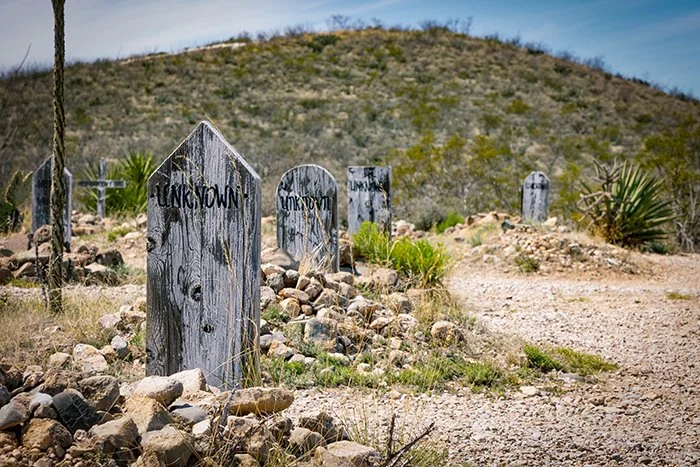
Featured: Boothill Graveyard in Tombstone, AZ
The Southwest
The Southwest's landscape — vast, dry, sun-bleached — does something particular to a ghost town. The bones of the old West are extraordinarily well preserved out here.
Jerome, Arizona
Perched on the side of Cleopatra Hill in central Arizona, Jerome is a former copper mining boomtown that nearly became a full ghost town before artists and eccentrics moved in and brought it partially back to life.
The result is one of the most atmospheric small towns in America: a few hundred permanent residents living among crumbling Victorian buildings, haunted hotels, and the remnants of a Wild West past that included enough murders, accidents, and disasters to fill several books.
The Jerome Grand Hotel is the most notoriously haunted building in town and offers overnight stays. Summer temperatures are more manageable than in the lower desert, making this an ideal warm-weather stop.
Ghost town factor: High — still partially inhabited but deeply ghost-town in feel.
Haunted stop factor: Very high. Extensive documented paranormal history.
Tombstone, Arizona
The site of the famous Gunfight at the O.K. Corral, Tombstone is one of the most visited historic towns in the American Southwest — and for good reason. The combination of genuine Wild West history, excellently preserved architecture, and a documented body count makes it a natural dark tourism destination.
Boothill Graveyard, where many of Tombstone's most notorious residents are buried, is free to visit and deeply atmospheric. The town leans into its history with ghost tours, historical reenactments, and a general willingness to acknowledge that a lot of people died violently here.
Ghost town factor: Medium — Tombstone is a functioning tourist town, not abandoned.
Haunted stop factor: High. The history is real and the tours are solid.
Terlingua, Texas
Near the spectacular Big Bend National Park in far West Texas, Terlingua is a genuine ghost town built on the remains of a quicksilver mining operation that collapsed in the 1940s. The ruins of the old company town — adobe walls, a crumbling church, an eerie cemetery — sit alongside a small community of artists and eccentrics who've made the desert their home.
It's remote (the nearest large city is more than two hours away), dramatically beautiful, and the kind of place that gets under your skin. Pair it with a trip to Big Bend for a Summerween road trip that balances the spooky with the spectacular.
Ghost town factor: Very high. One of the most photogenic and accessible ghost towns in Texas.
Haunted stop factor: Medium. More atmospheric and historically eerie than paranormal.
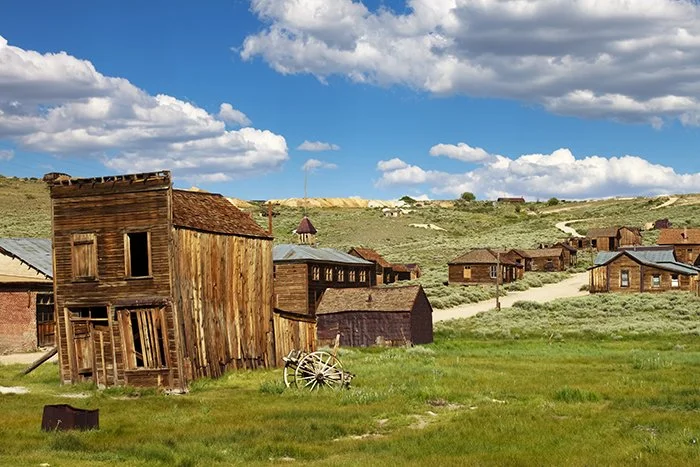
Featured: Bodie State Historic Park in Bodie, CA
The West
The American West has more ghost towns per square mile than anywhere else in the country. The legacy of mining booms that blazed bright and burned out fast.
Bodie, California
The gold standard of American ghost towns, literally and figuratively. Bodie sits at 8,375 feet in the Eastern Sierra Nevada, about 75 miles southeast of Lake Tahoe, and it is extraordinarily well preserved in a state of what the California State Parks department calls "arrested decay," meaning nothing is being restored, but nothing is being allowed to further deteriorate either.
At its peak in the late 1870s, Bodie had a population of nearly 10,000 people and one of the worst reputations for violence and lawlessness in the West. Today, roughly 200 buildings remain standing, and the park is open daily in summer with ranger-led tours available.
The "Bodie Curse" — which holds that anyone who removes anything from the town will suffer misfortune — has generated decades of letters from visitors returning rocks and artifacts.
Ghost town factor: The highest. Bodie is the definitive American ghost town.
Haunted stop factor: High. Well-documented paranormal history and ranger ghost tours in summer.
Virginia City, Nevada
A short drive from Reno, Virginia City was the site of the Comstock Lode, the richest silver strike in American history. At its peak in the 1870s, it was one of the wealthiest and most sophisticated cities west of the Mississippi.
Today it's one of the best-preserved Victorian mining towns in the country, with original saloons, hotels, and storefronts still intact and functioning. The Silver Queen Hotel and the historic Fourth Ward School are among the most documented paranormal sites. Summer brings festivals, ghost tours, and the kind of heat that makes the saloons feel like exactly the right place to be.
Ghost town factor: High — still partially inhabited but deeply historic.
Haunted stop factor: High. Decades of documented paranormal activity and strong tour infrastructure.
Rhyolite, Nevada
Near Death Valley in southern Nevada, Rhyolite is a strikingly photogenic ghost town that boomed and busted spectacularly in the early 1900s.
The ruins of the old bank building — three stories of ornate stonework being slowly reclaimed by the desert — and the famous Bottle House (constructed from approximately 50,000 beer and liquor bottles by a miner in 1906) make Rhyolite one of the most visually dramatic ghost towns in the country.
It's free to visit, accessible by car, and surrounded by the otherworldly landscape of the Mojave. Death Valley itself is best avoided in peak summer heat, but the Rhyolite area is manageable in the morning hours.
Ghost town factor: Very high.
Haunted stop factor: Medium. More visually dramatic than paranormally documented.
Fort Worden State Park — Port Townsend, Washington
A decommissioned military installation on the Olympic Peninsula, Fort Worden is a state park where visitors can explore abandoned barracks, walk through underground tunnels, and stay overnight in former officers' quarters.
The combination of abandoned military architecture, coastal isolation, and documented paranormal reports makes it a compelling summer destination, particularly because the Olympic Peninsula is spectacularly beautiful in July and August. The town of Port Townsend itself — a Victorian seaport with a strong preserved historic district — adds additional atmosphere.
Ghost town factor: Medium — a preserved military installation rather than a civilian ghost town.
Haunted stop factor: High. Extensive reported paranormal activity in the tunnels and barracks.
Road Trip Planning Tips
Summer is actually ideal for dark tourism. Ghost tours operate year-round at most destinations, but summer offers the practical advantage of longer days, which means you can explore in daylight and still catch an evening ghost tour with hours to spare.
Call ahead for ghost town access. Some ghost towns require advance reservations for tours, and a few have restricted or seasonal access. Check the specific site's operating hours before you commit to a detour.
Respect the sites. Ghost towns in particular are fragile. The Bodie Curse exists for a reason — don't take anything, don't damage anything, and don't ignore posted restrictions. Most of these places are surviving on careful preservation and visitor respect.
Pair spooky stops with scenery. The best haunted road trips work because the dark tourism is embedded in genuinely beautiful landscape. Bodie sits near Lake Tahoe and Yosemite. Terlingua is the gateway to Big Bend. The Stanley Hotel is surrounded by Rocky Mountain National Park. You don't have to choose between spooky and spectacular.
The playlist matters. You know where to find one.

What would you add to this list?
As always, add your picks to the comments.
Looking for haunted overnight stays specifically? Check out the Haunted Summer Getaways post for hotels and destinations worth booking a room.