

This content originally appeared in the 2025 spring issue of Spooky Little Halloween—The Magazine.
As winter fades and the earth awakens, spring is often seen as a time of renewal and rebirth.
Flowers bloom, animals return, and the world is bathed in longer, warmer days. We plant gardens, throw open windows, and shake off the heaviness of the cold months.
But beneath the pastel hues and gentle breezes, the supernatural lingers.
Just as the veil between worlds is said to thin in autumn — reaching its peak at Samhain and Halloween — spring carries its own eerie energy. It is, after all, a season defined by things returning from the dead.
Across cultures and centuries, legends tell of spirits that rise when the earth comes alive again, walking alongside the living in the liminal space between cold and warmth, darkness and light.
The Ghosts of Resurrection
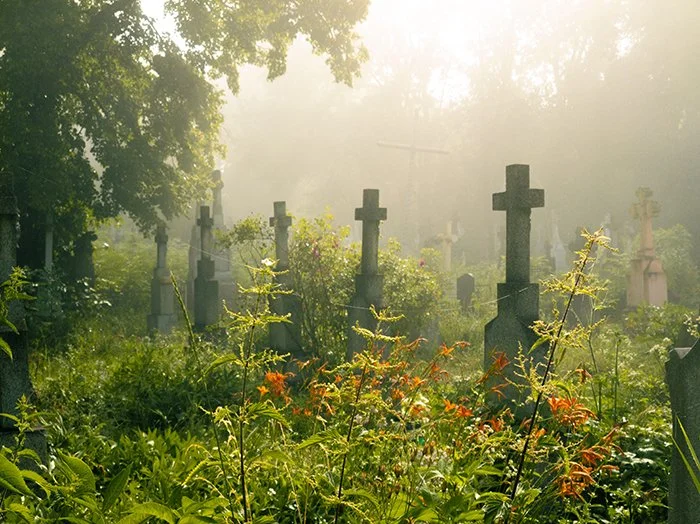
Spring has long been associated with resurrection — both in nature and in the spiritual realm. It's a theme woven into some of the world's oldest belief systems, and it's no coincidence that so many spring traditions, sacred and secular alike, center on the idea of something coming back to life.
In Japan, the custom of Higan marks both the spring and autumn equinoxes with rituals to honor ancestors, rooted in the Buddhist belief that the spirit world and the living world draw closest during these transitional moments. Families visit graves, clean headstones, and leave offerings — a quiet acknowledgment that the dead are near.
Similarly, in parts of Europe, the timing of Easter overlapped with older, pre-Christian beliefs that the returning warmth of spring could rouse spirits from their winter rest, requiring acknowledgment or appeasement from the living.
One of the most evocative springtime figures from folklore is the Green Lady of the British Isles, a spectral woman said to appear in lush gardens, dense forests, and overgrown country paths just as the world turns green again.
Draped in flowing emerald, she drifts between the trees like mist. Some traditions hold that she is the ghost of a woman who died in the woods — a tragic figure tied to the land by the circumstances of her death. Others say she is something older and stranger: a fae creature, not quite ghost and not quite living, who emerges each spring as a guardian of the natural world.
Whatever her origin, she is a reminder that not everything stirring in the garden is entirely of this world.
Spirits of the Water
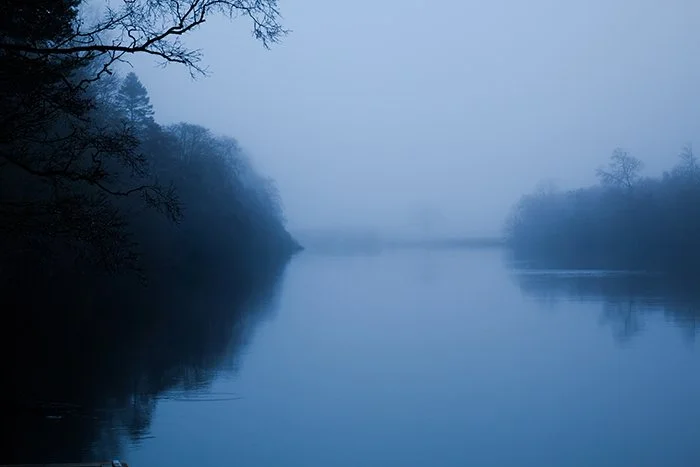
Spring is a season of water. Snow melts, rivers rise, marshes bloom, and rain soaks the earth for weeks at a time. There is something ancient and unsettling about bodies of water in spring — swollen and unpredictable, neither frozen nor calm.
It's little wonder that so many supernatural traditions associate this time of year with water spirits.
In Slavic folklore, the Rusalka is the spirit of a woman who drowned — often a young woman who met a tragic or untimely end near the water. Come spring, particularly around the week known as Rusalka Week in early June, these spirits were said to rise from rivers and lakes, slipping between the reeds and willow branches.
Early depictions cast them as vengeful and dangerous, luring unwary travelers to watery graves. But in softer retellings, the Rusalki are simply lonely — melancholy figures singing sad, beautiful songs in the half-dark, longing for a life they never got to finish living.
A similar ache echoes through the Latin American legend of La Llorona, the Weeping Woman. Most famous as a figure of the night, La Llorona is said to roam riverbanks in search of her lost children, her cries carrying across the water like a warning.
Though she is often associated with autumn and Halloween, many regional traditions place her most active appearances in early spring, when rivers swell with rain and the nights are still long enough for her grief to fill them. If you hear weeping near the water on a rainy spring night — it's probably just the wind.
Probably…
The WAlking of the Dead
Cemeteries that lay quiet and still beneath winter snow begin to stir in spring — at least according to folklore. The thaw, in many traditions, isn't just a physical phenomenon. It's a spiritual one.
In Germany and parts of Scandinavia, Walpurgisnacht — the night of April 30th — is one of the most storied supernatural nights of the year, a counterpart to Halloween on the opposite end of the calendar.
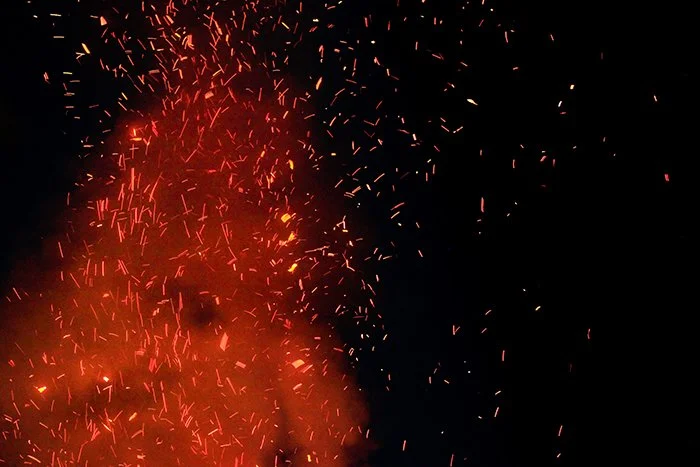
According to legend, this is the night when witches gather on mountaintops, ghosts walk freely, and the boundary between the living and the dead grows thin enough to cross. Bonfires were traditionally lit to ward off the spirits, and communities would make noise and move in groups to keep the wandering dead at bay.
Today it's mostly celebrated as a festive spring holiday, but the older, stranger tradition underneath is still there if you look for it.
Closer to home, the American South carries its own spring hauntings. Reports of Civil War ghost sightings have long been noted to cluster in spring, coinciding with the anniversaries of major battles fought between March and June. At sites like Shiloh, Gettysburg, and Antietam, visitors describe shadowy figures moving at the tree line, unexplained sounds, and an overwhelming sense of being watched.
Whether these are genuine hauntings or the power of place and memory working on a willing imagination, there is something undeniably potent about standing on hallowed ground in the season when those battles were fought — as if history itself refuses to stay buried.

Supernatural Spring
Spring may be a season of life and warmth, but it does not chase away the supernatural. It merely gives it new shape.
Whether through ancient rituals, mournful water spirits, or the restless dead returning with the blooms, the folklore of spring reminds us that resurrection is rarely simple — and that the line between the living world and whatever lies beyond it is thinner than we like to think.
As the flowers bloom and the days grow longer, keep an eye on the shifting shadows. You never know what might be waking up alongside the rest of the world.