
This post is part of my Cemetery Appreciation Month series. It contains affiliate links. See the end of this post and/or my disclaimer for more.
One of my favorite parts of wandering cemeteries is studying the headstone symbols. If you've ever spent time in cemeteries, especially historic ones, you've likely noticed them too.
Sometimes the symbols are carved into the headstone, like a compass or pentagram. Other times, they're part of the headstone, like a lamb sitting on top.
Ever wondered what those mean? Today we'll dive into five of the most common symbols, and my lovely friend (and fellow Texan!) Tui Snider will tell you what they mean.
5 Common Cemetery Symbols and What They Mean
By Tui Snider, tuisnider.com
The more time you spend in historic cemeteries, the more symbols you’ll notice on headstones. Decoding their meaning is like learning a hidden language, a language our ancestors were fluent in, but one that’s been mostly forgotten in modern times.
I find the topic so fascinating that I wrote a book about it called Understanding Cemetery Symbols. I also enjoy sharing videos about cemetery symbols and historic burial grounds on my YouTube channel.
Cemetery symbolism is a fun topic that I never stop researching. For instance, did you know there are over 300 types of crosses, each with a different history and meaning? And did you know that America’s garden cemeteries were our first public parks?
There’s a lot to learn, but you’ve got to start somewhere.
Here are five common cemetery symbols along with brief descriptions of what they mean:
Lamb
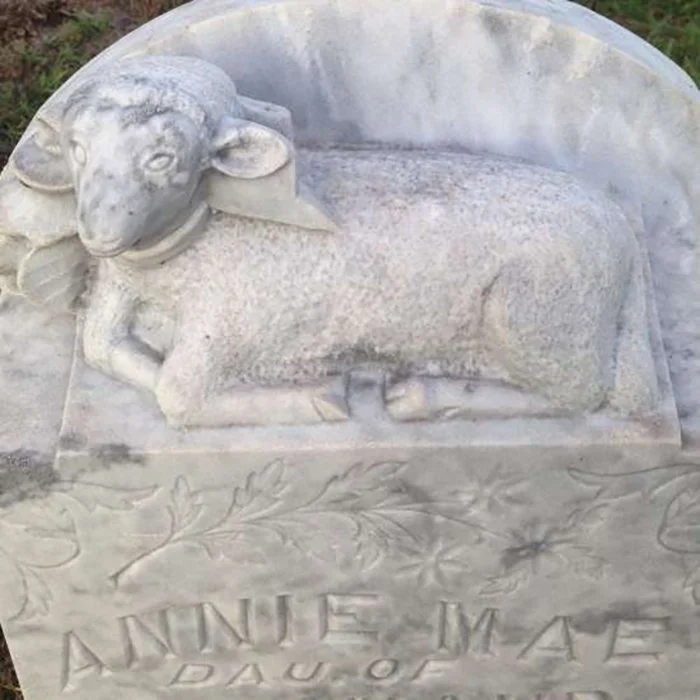
On tombstones, lambs represent innocence and sacrifice. This comes from a Bible verse (John 1:29) where John the Baptist calls Jesus, “the Lamb of God who takes away the sin of the world.”
Lambs are nearly always placed on graves of young children, which is why they are an all-too-common sight in historic cemeteries. Infant mortality rate was so much higher in the past.
Although the lamb in the photo here is in good shape, these carvings don’t always weather well. For this reason, lambs are one of the most frequently misidentified objects. People often send me photos of worn-down lambs thinking that it’s a dog, camel, and in one case, a rat!

Obelisk
Ancient Egyptians created the obelisk as an homage to their sun god, Ra. When Christians adopt the symbol, however, it represents a connection between Heaven and earth. It also represents power, strength and fatherhood. In historic cemeteries, an obelisk is often at the center of a family plot, where it represents the family members’ connection to the heavenly father.

Pentagram (5-pointed star)
Although pentagrams are a common sight in historic cemeteries, I often get frantic emails saying things like, “There’s a pentagram on my grandma’s headstone! Was she a satanist?” It doesn’t help that these five-pointed stars often have the word “fatal” inscribed within them.
While it’s true that pentagrams have become Hollywood shorthand for “evil,” there’s no reason to be scared when you see one in a cemetery. For one thing, FATAL is an acronym. It stands for “fairest among ten-thousand, altogether lovely.” Pretty nice, eh?
In fact, pentagrams, such as the one in this post, signify that this person was a member of the Order of the Eastern Star, which is the women’s branch of the Masons.
The figures inside each ray of the star are symbolic, too. Each of these symbols represents one of the five Biblical heroines (Adah, Ruth, Esther, Martha and Electa) as they fulfill the many different roles that a woman can have throughout her life.
Dove
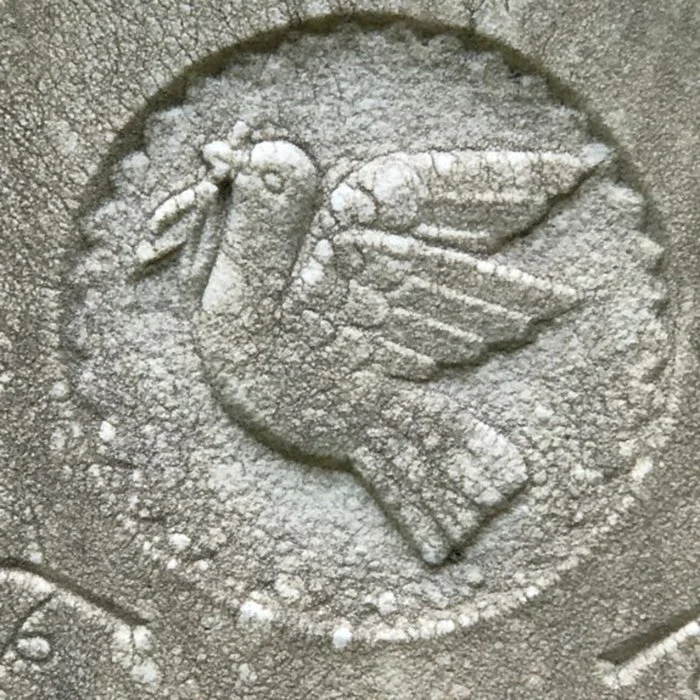
Most of the time, doves represent the Holy Spirit. When shown flying upwards, doves represent the soul’s ascent to Heaven. Although doves can appear on the headstones for people of all ages, when you see one with a broken wing, it stands for the innocent life of a young child who was taken too soon.

Anchor
While anchors sometimes appear on the graves of sailors, you may be surprised to learn that this is the exception, not the rule! More often than not, when seen on an older headstone, the anchor is a Christian symbol representing faith set in strong foundations.
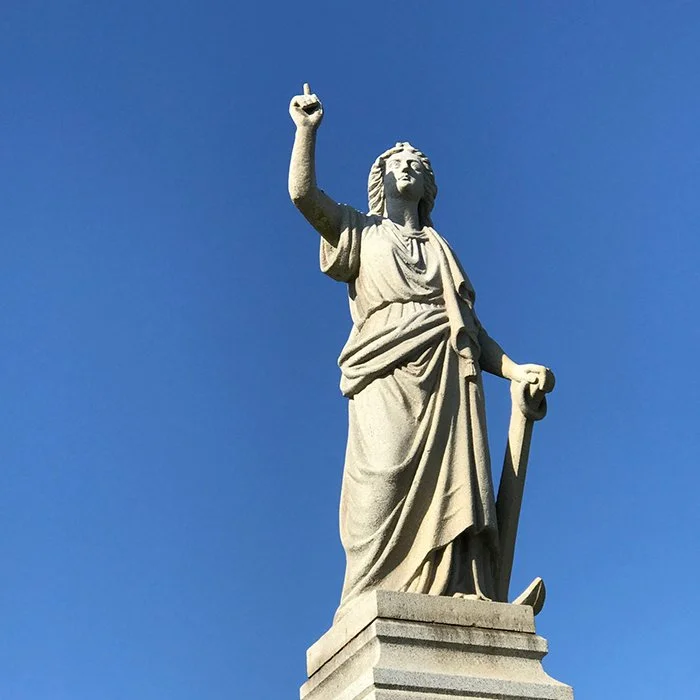
During the Roman persecution of Christians, the anchor served as a secret symbol, a covert referral to the cross. This is why anchors represent hope in troubled times. When you see a statue of a woman with an anchor beside her, it stands for the virtue, Hope.
Bonus Tip & A Free Book!
Learning about cemetery symbols can be overwhelming, but a good place to start is with the symbolism of hands. That’s how I got my husband interested in the topic. Hands are easy to recognize, but they can be used to symbolize everything from sudden death, marriage, martyrdom, your religious affiliation and more.Grab my FREE booklet about the meaning of hands.

Tui Snider is a Texas-based travel author and blogger who specializes in quirky, haunted and downright bizarre destinations. As she puts it, “I used to write fiction – but then, I moved to Texas!” In addition to blogging about her haunted travels at TuiSnider.com, each day she posts a historic graveyard photo on Instagram, Twitter and Facebook. She is the author of Understanding Cemetery Symbols: Your Guide to Historic Graveyards and has several true ghost stories in the anthology, Spirited Tales.
This post contains affiliate links. If you click an affiliate link and make a purchase, Spooky Little Halloween will earn a small commission for the referral at no cost to you. Read more about affiliates & disclaimers here. I am a participant in the Amazon Services LLC Associates Program, an affiliate advertising program designed to provide a means for us to earn fees by linking to Amazon.com and affiliated sites.