The Halloween Lover’s Guide to Fall
You don't need a guide to fall as a Halloween lover. You've been preparing since August. Heck, you've been preparing your whole year for this season!
You know which haunted houses in your region are worth the drive and which are just teenagers in masks. You have a watchlist that would take three Octobers to finish. Your decorations have decorations. The pumpkin patch is already on the calendar.
Fall is yours. It has always been yours.
This guide isn't for beginners. It's not a list of obvious things dressed up as discovery.
It's for the person who has done every surface-level thing that spooky season offers and wants to go further — into the stranger, quieter, more genuinely atmospheric version of fall that exists just underneath the one everyone else is having.
You've been practicing all year. Here's what to do with that.
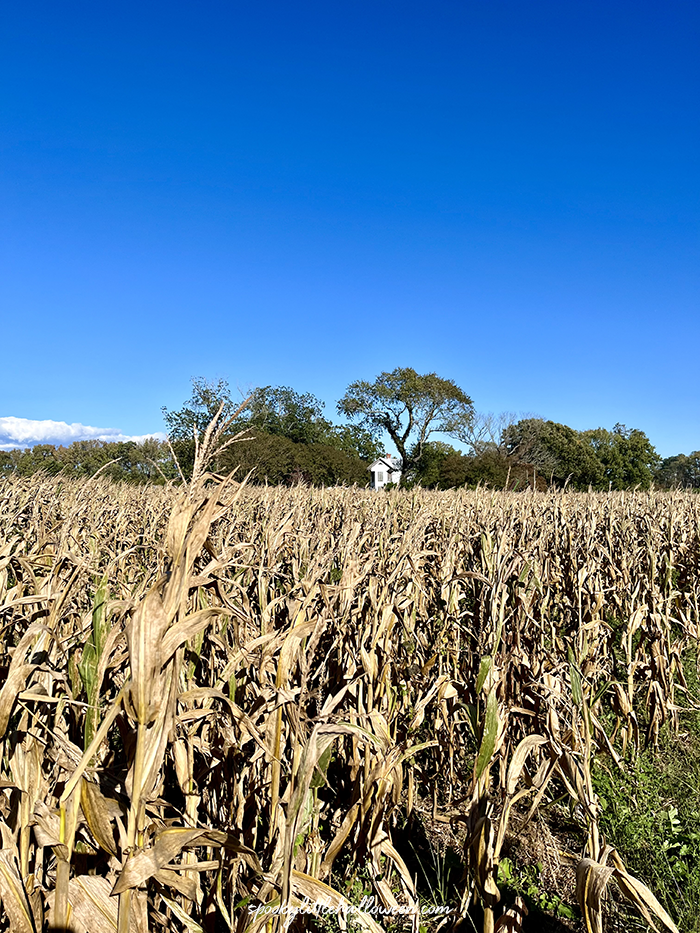
Corn maze at Cullipher Farm in Virginia Beach, VA.
September: The Art of the Slow Start
Most Halloween people waste September. They're so focused on October that they treat the whole month as a waiting room — ambient anticipation with nothing to show for it.
This is a mistake. September is the best-kept secret of the fall season, and the people who learn to use it have a richer autumn than everyone else.
Learn to Read the Season Changing
There's a specific window — different every year, different in every region — where summer tips into fall. The light shifts first, going gold and horizontal in a way it doesn't in August. Then a smell arrives, difficult to describe but immediately recognizable: something about cooling soil and the first leaves letting go. Then the sounds change.
This year, try to catch it. Actually stop and notice when it happens. It's easy to miss when you're waiting for October and treating September as preamble — but the moment the season turns is one of the better things the year has to offer, and it rewards attention.
Go to the Places Before the Crowds Arrive
Every haunted attraction, every corn maze, every apple orchard with a cider donut queue that wraps around the building — they all exist in September in a quieter form. The decorations are going up. The staff is still fresh. The energy is anticipatory rather than peak-season frantic.
The cemetery you'll visit in October is worth visiting in September too, when the light is still warm enough to stay a while and you have the whole place to yourself. The hiking trail through the best fall foliage is worth scouting before the foliage peaks. September is for reconnaissance and slow appreciation. Use it.
Start Something That Will Last the Whole Season
The best fall experiences aren't events — they're practices. A daily walk that tracks the same trees as they change. A reading project timed to finish on Halloween. A creative project with a natural October deadline. A journal of strange things noticed.
September is when these begin. The people who start them have a fundamentally different fall than the people who don't.

October: Going Deeper Than the Checklist
You already have the checklist. This is everything that lives underneath it.
Beyond the Haunted House
Haunted houses are wonderful and you should go. But they're also a specific kind of controlled, commercial experience — someone else's vision of scary, optimized for throughput. For every haunted house on your list, try to add one experience in a different category: a location with a documented, actual history rather than a fabricated one. A ghost tour that's led by a historian rather than a performer. A building that's genuinely old and open for exploration rather than decorated to seem so.
The real thing and the theatrical thing scratch different itches. Both are worth having in the same season.
The Overlooked Local History
Every county has a history that the tourism board isn't leading with. The thing that happened at the old mill. The epidemic year. The building nobody will buy. The road with the name nobody can explain.
October is the season when local historical societies, libraries, and small museums do their most interesting programming — lectures on plague history, walking tours of forgotten cemeteries, exhibits on local folklore that they've been sitting on all year waiting for an audience. These events are rarely packed. They're often free. They are, reliably, more interesting than anything that requires advance ticket purchase.
Find them. Go to them. Ask questions afterward.
Do One Thing You've Never Done
You've been at this long enough to have a comfort zone — the same haunted houses, the same trails, the same hosting formula. This October, add one thing that's genuinely outside it. Not scarier, necessarily. Just different.
The options are wider than they look: a cemetery photography workshop, a class on death floristry or Victorian mourning traditions, a dark tourism day trip to somewhere you've been meaning to visit for years, a folklore walk in a neighborhood you don't know. The season is rich enough to have unexplored territory even for the most dedicated observer. Find your unexplored territory.
Slow Down in the Middle
Peak season burnout is real, and it's worst for the people who care most. The second and third weeks of October, when every event is happening at once and the FOMO is loudest, are the weeks most likely to leave you exhausted by Halloween itself.
Build in a slow day. A day where the only fall thing on the agenda is a long walk and whatever you want to read. The season doesn't have to be fully maximized to be fully enjoyed — and arriving at Halloween rested and present is worth more than checking every box.
Halloween Itself: The Practice of Presence
All of this has been leading here. Use the day accordingly.
Stop Apologizing for How Much You Care
This one isn't an activity. It's just true: there is nothing wrong with caring this much about a day. The people who love Halloween deeply — who have been building toward it all year, who feel it as something ancient and genuine and worth honoring — are responding to something real. The festival is old. The impulse underneath it is older. Your investment in it is not childish or excessive. It's correct.
Don't spend the day performing ironic detachment. You're not fooling anyone, least of all yourself.
Make It a Ritual, Not Just a Party
The best Halloweens are the ones that feel intentional — where the day has a shape to it, where each part of it means something. Start it the same way every year. Have something you do at dusk. Have something you do at midnight if you're still up. Eat something specific. Light candles at a specific time.
Ritual doesn't have to be elaborate. It just has to be chosen. The accumulation of years of the same intentional gestures makes the day feel genuinely sacred, in whatever sense of that word works for you.
End the day with Purpose
The hardest moment of the year for a lot of Halloween people is 12:01am on November 1st. The season that has been building since August ends, not with ceremony, but with everyone going to bed.
This year, end the day with purpose. Mark it. Sit outside for a few minutes after everything is over, while the last of the smoke and the cold and the night air are still there. Acknowledge that it happened and was good. Thank it, if that's the kind of person you are.
The year will start again tomorrow. You know how to find what you need in it.
November: The Afterglow Is Part of It
The post-Halloween slump is real, and this guide series exists because of it. But before you start reaching for the next thing, there's value in staying with November for a moment.
The season doesn't vanish on November 1st — it just goes quieter. The leaves are at their peak in many regions. The light is extraordinary. The cemeteries are filling with the last of the chrysanthemums. The atmosphere that Halloween was pointing at is still fully present; it's just not decorated for anymore.
You know how to see it without the decorations. You've been practicing all year.
Give November a week before you start planning what's next. It earned it.

You Already Know How to Do This
The thing about being a serious Halloween person — a year-round one, the kind this entire series was written for — is that the season isn't really something that happens to you. It's something you build and tend and return to.
The spring walks and the summer nights and the deep winter dark: all of it has been practice for this. All of it has been a way of staying connected to the thing the season is actually about — the beauty of darkness, the weight of history, the pleasure of being interested in what most people look away from.
You know how to do this. You've always known.
Now go have the best October of your life.