
This content originally appeared in the 2024 issue of Spooky Little Halloween—The Magazine. All photos courtesy of George Streicher.
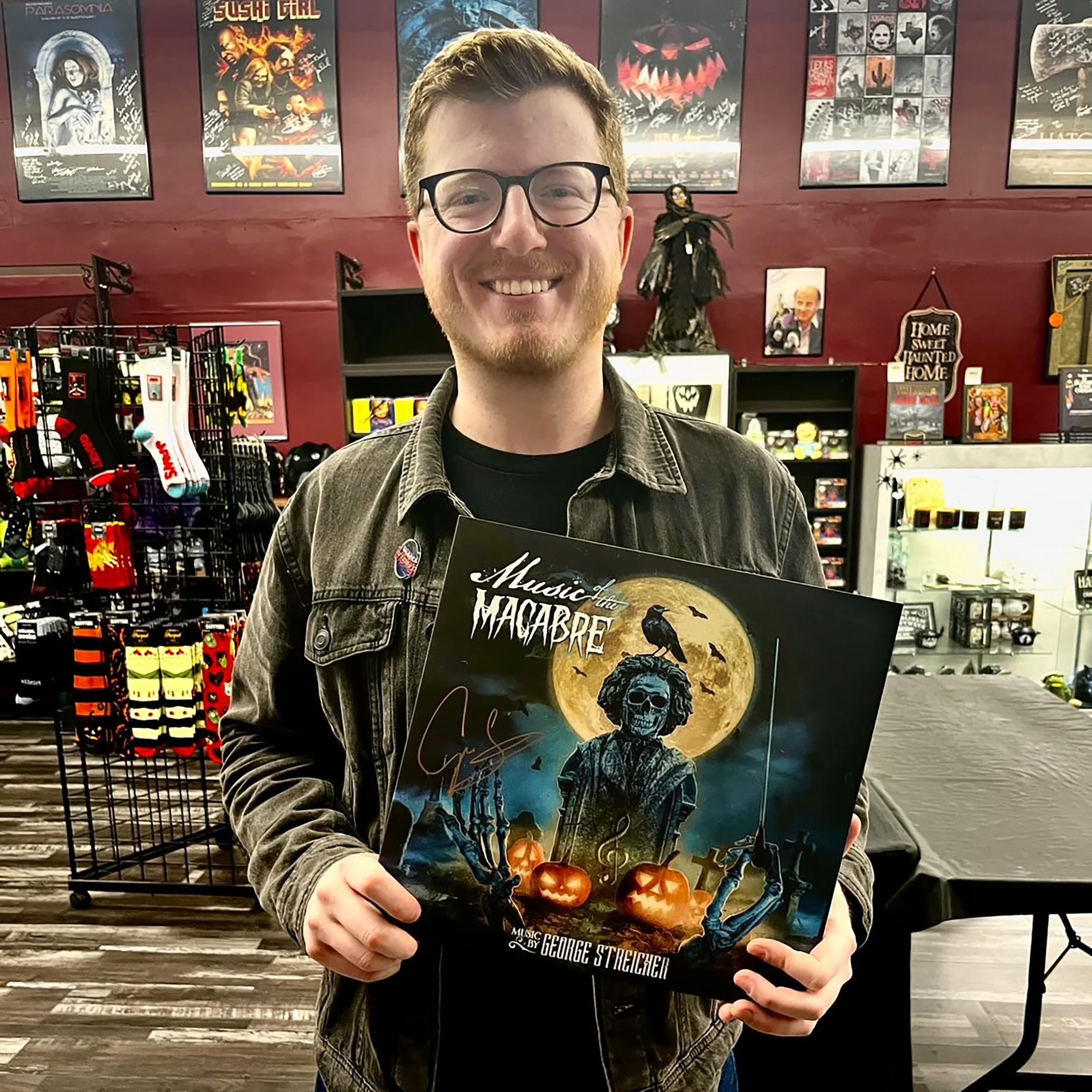
Need a new soundtrack for spooky season? Then prepare to fall in love with “Music of the Macabre,” created by George Streicher (he/him).
A TV and film composer by day, George set out to use his professional skills to create a little something for Halloween lovers back in 2022, and boy, did he succeed.
“Music of the Macabre” is a 10-song instrumental journey through a cemetery that comes to life once you step foot inside.
From “Scherzo for a Harvest Moon,” meant to conjure up ghosts, to an iconic 90s Halloween sound dropped into “Memories of Halloween”, there is nothing more magical than giving this album, available on streaming services, a listen anytime you need the Halloween feels.
In early 2024, George was a guest on By Pumpkin’s Light. Here’s a snippet of the conversation to help you get to know him and his work.
Q&A with George Streicher
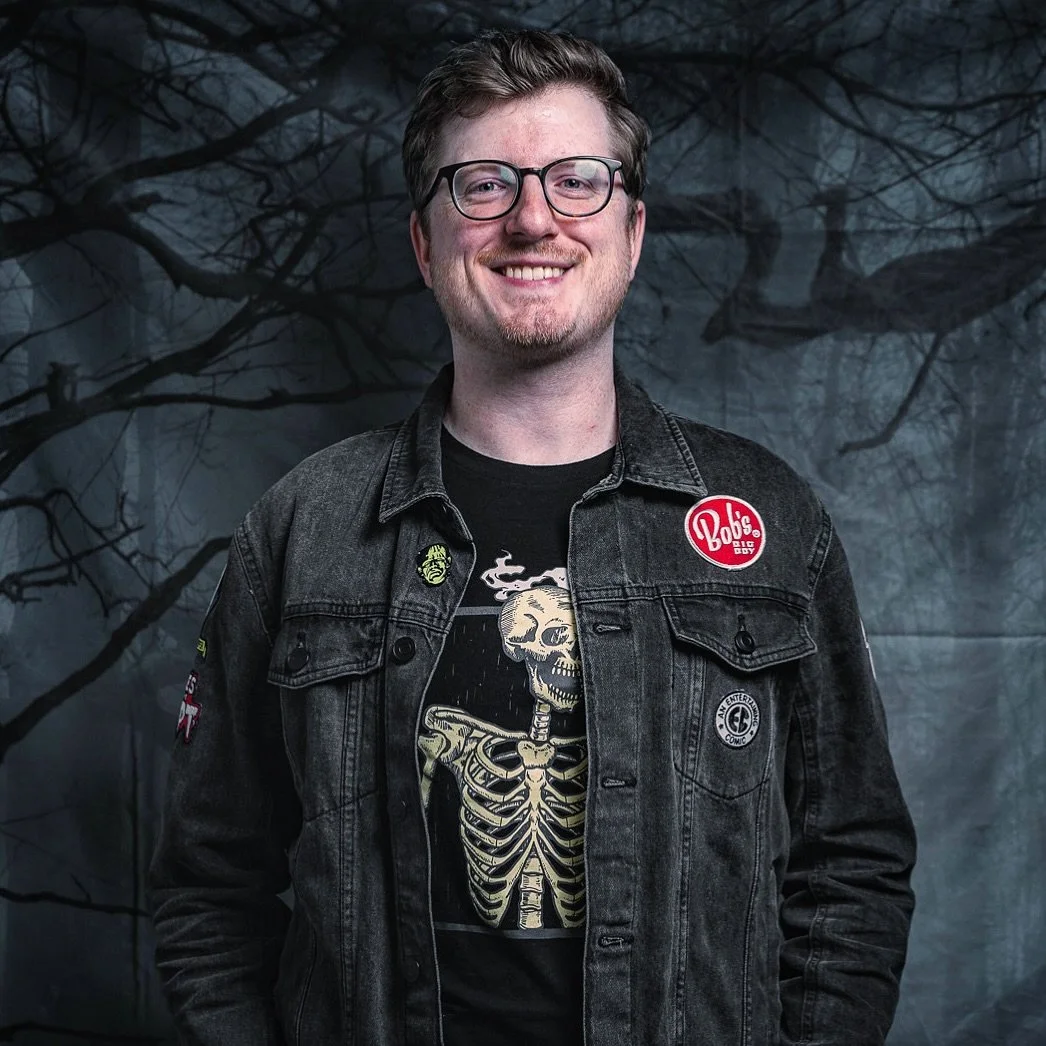
You’ve done a lot of work for different TV shows and films but are drawn to spooky music. What is it about this type of music that inspires you?
I think because I’m kind of a scaredy cat. When I was a kid, I was horrified of anything like haunted houses. I remember being at some county fair where this guy had a trailer that was the walk-through haunted house. I remember going in there and convincing my dad, ‘You know, I think I’m ready to go through this.’
All my siblings charged ahead in front of me, and they had no problem with it. I got five steps into the thing, turned around, and ran out the front door.
Honestly, I don’t think I got over my fear of haunts until I moved out to California.
Now I walk through them with a big smile. I still get scared, of course, which is more being startled, but I’m in awe of them.
Listening to music when I was a kid if I heard something creepy, it gave me that same feeling. I remember seeing “The Shining” for the first time, and that music scared the crap out of me — it would scare me more than watching the movie or going to a haunted house because of the way it just gets under your skin.
Listen to this full Q&A on By Pumpkin’s Light
Do you have a favorite horror Halloween score? Are there any particular composers known for the genre that influenced you or inspire you today?
My favorite Halloween score would probably be “Hocus Pocus” by John Debney because I just love it. I think I’m falling back in love with Douglas Pipes “Trick ‘r Treat” score — he’s such a phenomenal composer. And of course, the “Krampus” score was great.
How does scoring spooky cartoons compare to creating a Halloween album like “Music of the Macabre”?
When you’re doing film scores, you’re very limited in what you can and can’t do. Outside of a few moments in the movie and developing your material, you’re tasked with following what’s already been written. You know you have two minutes, and in those two minutes, there’s 20 to 30 different moments that you need to capture. It’s about telling you what the mood is.
But with the Halloween album, it was really a couple of years of exploring and trying to find stuff that I felt inspired by or maybe things that I wanted to emulate or feelings I wanted to capture. It was more free, in that sense, but also a lot more daunting.

Did you have a sense of a story when you started “Music of the Macabre” or was everything created as its own little piece?
A little bit of both. When I’d written all the pieces, I looked at what I had and laid out the track list in a way that I felt was a good listening experience. But I also had a sense of beginning and completion.
The opening is walking into the cemetery at night and then the cemetery comes to life with the music.
The character of the album is the maestro (on the cover), which I imagine is this old, dead composer — decomposer rather — and this is all of his music that you’re hearing. The cemetery comes to life in that first track and then leads into the second track.
We move on to “Memories of Halloween,” which is a more nostalgic look back and then it closes with the acapella version of “Samhain.” At the very end, you hear the cemetery gate close and that’s the end of our story. I was really trying to find a lot of variety to inject into the album.
Ultimately, I decided to do a handful of full orchestral writing and then a handful of smaller ensemble things.

What inspired “Memories of Halloween” and what was it like trying to craft an entire piece of music around something that’s basically a spooky sound effect?
What inspired that song was I was home in Illinois for the first time in a while to see the seasons change. I saw true fall happening — the crunching leaves on the ground, the beautiful scenery, the crisp air — and I started getting nostalgic about Halloween from when I was a kid.
I was in the middle of writing the album, and I thought I should try to write something that captured these very intense, nostalgic memories I have for Halloween. I was watching a lot of home videos which are shot so poorly and are so dark. You can’t see anything. You just hear a lot of kids yelling.
I heard the classic theremin sound of that shaking ghost that I remembered so well, and then I realized, ‘Oh, those are two notes. That’s an interval.’ And I thought, ‘I could harmonize those. That could be sort of a motif in a piece.’
So it really took off from there. And I was very excited about that piece. And I think it stands to be my favorite piece on the album for just inspiration alone. It felt so close to what I was trying to capture.

Could we see a “Music of the Macabre, Part 2” or some similar Halloween album in the future?
Absolutely. I’m currently kind of fiddling with ideas. “The Headless Horseman” would definitely appear on the album. I did that as a fun single to drop on social media only. It’s not on streaming or anything.
It would probably be a just a “Music of the Macabre, Volume Two” or “Tunes From the Tomb.” There’s so much more to explore with that. Whether it would be full orchestral or more small ensemble stuff is yet to be known, but I’m actively working on it. We’ll see how fast I can get it done satisfactorily.