Welcome to Halloween 101 — a new series on Spooky Little Halloween where we cover all the essential building blocks of celebrating Halloween, from decorating to costumes to candy math and everything in between. New posts go up every other Monday through the end of October, so check back often!
A great costume doesn't have to mean a big spend.
Some of the most memorable Halloween looks come from a closet raid and a little creativity rather than a costume shop receipt.
If you're planning your look for this year — or helping outfit a whole family — here's how to do it without overspending.

See how I turned one Halloween outfit into three themed costumes using what I had in my closet.
Start with what you already own
Before buying anything, take stock of what's already in your closet. This is the single biggest money-saver, and it's often the difference between a $60 costume and a $10 one.
Old sheets, plain T-shirts, and basic clothing pieces can become the foundation for a surprising number of costumes — a white sheet with cut-out eye holes makes a classic ghost, a black turtleneck and pants can become a sleek cat, and an old dress with some strategic distressing turns into a convincing zombie look.
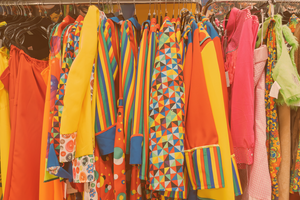
A handful of closet staples — overalls, a button-down shirt, a silk scarf, a little black dress — can each be styled into multiple different costumes depending on what you pair them with.
Before you shop for a single new item, ask: what's the closest costume I can build from what's already hanging in my closet right now?
More tips:
DIY Halloween costume ideas from Goodwill of Silicon Valley
Halloween costumes using basic items in your closet from The Sorry Girls
Shop secondhand before shopping new
If your closet doesn't have quite enough to work with, thrift and secondhand stores are the next stop — not the costume aisle.
Thrift stores are a reliable source for costume pieces precisely because they're full of items nobody's actively shopping for as "costume-specific," like vintage blazers, formal dresses, oddball accessories, which means lower prices and more one-of-a-kind options than a costume store's mass-produced rack.
This also tends to make for a more memorable costume; a thrifted, slightly-off-trend piece often reads as more interesting than something obviously bought off a costume display.
Build from a base piece, not a whole outfit
Rather than shopping for "a costume," shop for one strong base piece, then build around it with things you already own or can borrow. A neutral tulle skirt, for example, is one of the most versatile pieces you can own for Halloween — pair it with wings and glitter for a fairy, a tiara for a princess, or boots and fangs for a vampire, and you've got several costume options for one purchase that gets reused year after year. This approach means you're investing in pieces with multiple future uses, not single-occasion buys.

My friend Nicole came as “cat calling” to my 2017 Halloweenie Roast.
Lean on wordplay and simple props over elaborate construction
Some of the funniest, most recognizable costumes need almost no sewing or crafting, just one or two well-chosen props.
A "cereal killer" costume is just a plain black outfit with empty cereal boxes attached and a plastic knife through them. A "social butterfly" is cheap fairy wings with social media logos taped across them. These costumes work because the concept does the heavy lifting.
You're not trying to build something elaborate, you're trying to make one clear, funny visual connection.
Plan ahead instead of panic-shopping
Budget and timing go hand in hand. Last-minute costume shopping almost always costs more because you're paying for convenience instead of comparison-shopping.
Give yourself a few weeks of lead time to check your closet, browse thrift stores, and see what you can DIY before resorting to a same-week purchase.
If you do end up shopping last-minute, prioritize one strong base piece (like a wig, a specific prop, or a single statement item) rather than a full pre-packaged costume. It's usually cheaper and more flexible.
A few principles that apply everywhere
One good prop beats a dozen small accessories. A single well-chosen item (a cape, a prop weapon, a distinctive hat) often sells the costume more than several smaller add-ons combined.
Makeup is one of the cheapest transformations available. A mime, clown, or zombie look can come together with face paint you probably already have, no costume purchase required at all.
Group costumes split the cost — and the effort. Coordinating with friends or family on a group theme means everyone only needs one or two pieces rather than building a whole look solo.
Buy pieces you'll wear again. A versatile black dress or a flannel shirt does double duty as both a costume piece and regular wardrobe, which makes the spend feel a lot less like a one-time cost.

You don't need a big budget to have a great costume
The most memorable costumes are usually about a strong idea, not a big price tag. Start with your closet, fill gaps secondhand, and save new purchases for pieces that'll earn their keep beyond just one Halloween night.
Looking for some costume inspo? I love a costume pulled from my closet:
Spirit of Halloween costume, a character I made up for a blog post